Decentralized finance, blockchain, and crypto markets
Rain and Avici say users affected by a Solana-linked crypto-card vulnerability will be refunded, putting operational controls ahead of marketing claims.
Circle says USDC, EURC, CCTP, and Bridge Kit are live on Plasma, extending stablecoin infrastructure into payments, treasury, trading, and foreign-exchange workflows.
HashKey says it will bring an on-chain U.S. government liquidity fund to Asian markets with Franklin Templeton, extending the tokenization story from pilots toward regulated distribution.
A transaction involving HSBC and Standard Chartered shows how blockchain experiments are moving from asset issuance toward the settlement layer used by regulated banks.
Stable Mint is less about a speculative tick and more about moving stablecoin payments, bank rails, and merchant settlement into one platform.
Kraken's AVL listing gives Avalon Labs more liquidity, but it also reminds the market that Bitcoin DeFi still depends on exchange distribution to scale beyond early believers.
Circle and Coinbase are each pushing stablecoins into different corners of the real economy: cross-border payout rails, local-currency trading access, and more practical settlement workflows. The pattern is bigger than one market update. It is evidence that crypto's most durable use case may be becoming boring infrastructure.
A morning briefing covering regulatory hurdles for U.S. equity perps on Coinbase, a technical price analysis of the Aave protocol, and the expansion of crypto gambling in Europe.
A review of three distinct developments in the crypto market: a critical test for Bitcoin ETF inflows amid upcoming economic data, Coinbase's CEO considering a move out of California due to tax policy, and survey data indicating Americans prefer traditional retirement security over Bitcoin.
Coinbase is rolling out futures, perpetuals, and options for UK professional investors, signaling that regulated derivatives are now part of its global exchange strategy.
Bitcoin's move back above $80,000 is being driven by Treasury buyback headlines, short covering, and ETF inflows just as regulators debate how much identity checking stablecoins should require.
Kraken's new Price Predictor and BTC trading challenge show exchanges still compete for daily engagement, not just spot volume.
A Treasury buyback expansion and a new SEC crypto proposal are giving digital assets something they have wanted for a long time: less macro noise and more regulatory definition.
Cloudflare's wallet and identity push, paired with Coinbase's x402 work, is making stablecoin micropayments feel less like crypto infrastructure and more like a machine-native web primitive.
The Clarity Act has moved from an industry wish list into a Senate scheduling fight, and that alone shows digital asset policy is now more about legislative timing than technical ideas.
Binance's August 23 restriction on 11 crypto platforms is a compliance move, not a token delisting, and it shows sanctions-aware transaction screening is now baked into exchange operations.
Laser Digital Japan's August 21, 2026 registration matters because it is the first new Japanese crypto exchange approval in four years and shows that the next phase of digital-asset growth in major markets may be led by institutional market structure rather than retail speculation.
The Ethereum Foundation's August 17, 2026 Platåberget launch matters because it tells wallets, indexers, and gas-estimation tooling to fix breaking assumptions now instead of discovering them after Glamsterdam reaches longer-lived public networks.
The SEC proposed a tailored securities-offering framework for some crypto investment contracts, creating startup and fundraising exemptions that could reshape token launches.
The SEC canceled an August 14 open meeting that was set to consider proposed rules for certain crypto-asset investment contracts.
Tether's federally regulated USAT stablecoin has expanded from Ethereum to Celo, where fee abstraction lets users pay network gas in the stablecoin itself. The move links compliance, distribution, and everyday transaction design.
A joint UK–US statement treats stablecoins as digital-money infrastructure and calls for compatible rules that support cross-border payments without weakening safeguards.
Circle's cirBTC is now live on Ethereum as a 1:1 bitcoin-backed token, giving institutions another route to put BTC collateral into lending, market-making, and settlement workflows.
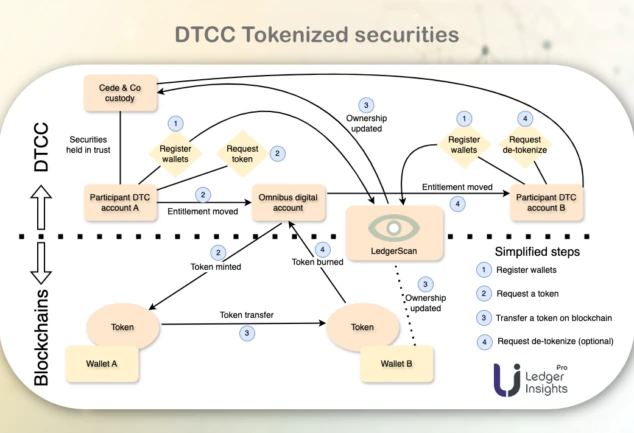
DTCC says assets held at The Depository Trust Company were converted into tokens and used in real production trades with roughly 40 participating firms, putting regulated market infrastructure at the center of the next tokenization test.