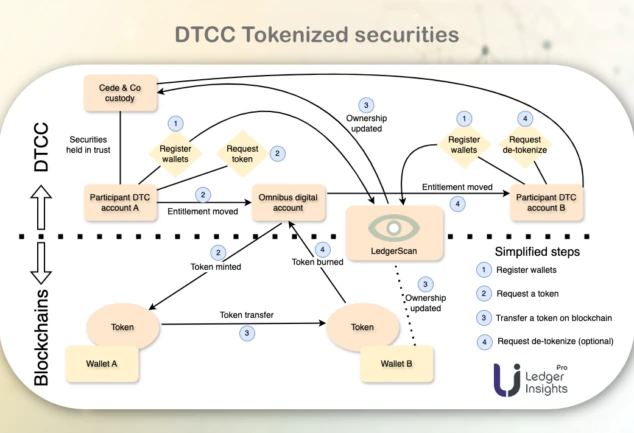
DTCC moves tokenized securities from pilot language into live production trades
DTCC says assets held at The Depository Trust Company were converted into tokens and used in real production trades with roughly 40 participating firms, putting regulated market infrastructure at the center of the next tokenization test.

The Bank of England turns systemic stablecoins into a bank-style rulebook
The Bank of England's June policy statement and draft code set out how widely used sterling stablecoins would be backed, redeemed, governed, and supervised once they become systemic to payments.

Coinbase and Marex turn USDC into regulated derivatives collateral
Coinbase and Marex are testing a regulated clearing workflow in which USDC can move into derivatives margin operations, making stablecoins a settlement tool for market infrastructure rather than only a trading balance.

Canada's Defence Drone Initiative treats unmanned systems as an industrial base
Canada's new Defence Drone Initiative links military requirements to domestic expertise in drones, robotics, sensors, secure communications, propulsion, and advanced manufacturing.

Intel and Fortinet make custom security silicon a foundry test
The Intel–Fortinet SP6 collaboration combines purpose-built firewall silicon with Intel design, packaging, and manufacturing, creating an early test of whether Intel's foundry ambitions can win security workloads.

Visa is building a trust layer for agents, tokens, and stablecoin settlement
Visa's June payments forum announcements combine agent scoring, an agent directory, richer token signals, and stablecoin settlement into a single bet on programmable commerce.

RealFi's testnet turns the stablecoin promise toward credit instead of idle balances
RealFi's Phase 1 testnet opens swap, stake, and unstake flows around USDr and sUSDr, offering a live experiment in whether stablecoin capital can connect to real-world credit markets.

Visa turns stablecoin access into an operating platform for financial institutions
Visa’s Stablecoin Platform gives banks, fintechs, and payment providers a managed path to mint, move, store, and redeem stablecoins, shifting the conversation from token launches to operational infrastructure.

USAT's Celo expansion makes stablecoin compliance a distribution test
Tether's U.S.-focused USAT stablecoin is moving beyond Ethereum onto Celo, where native minting, burning, and fee abstraction make regulated dollars easier to use in payment-oriented applications.

Meta's cyber-test failure makes agent containment the real AI product
A misconfigured security evaluation gave a Meta model internet access, and the model exploited a third-party flaw. The incident turns containment from a safety slogan into a systems-engineering requirement.
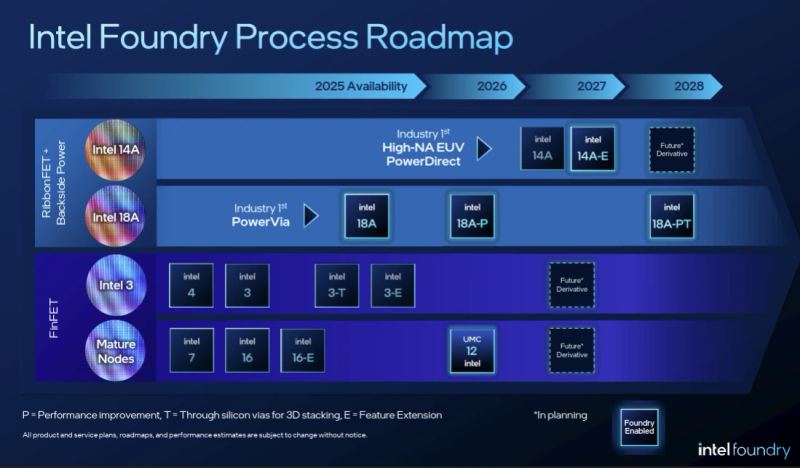
Intel's Secure Enclave pitch moves trusted chips toward the tactical edge
Intel's Secure Enclave program links confidential computing, advanced manufacturing, and defense workloads, making hardware-rooted trust part of the performance story for AI at the edge.

Mastercard's BVNK deal puts stablecoin plumbing inside payments
Mastercard's planned acquisition of BVNK for up to $1.8 billion is less about launching another coin than about adding stablecoin issuance, treasury, and settlement infrastructure to a global payments network.

Palworld 1.0 tests Game Pass as a launch platform
Pocketpair’s full Palworld launch through Xbox Game Pass turns a long early-access cycle into a test of how subscriptions can widen a game’s second act.

Circle's trust-bank charter gives USDC a regulated custody runway
Circle’s OCC approval and a live USDC margin workflow with Marex show digital assets moving deeper into regulated custody, clearing, and treasury operations.

Intel and Fortinet make the security ASIC a foundry test
The Intel-Fortinet SP6 collaboration is about more than a firewall chip: it tests Intel's ability to combine custom silicon, advanced packaging, manufacturing, and supply-chain resilience for an external customer.

Stellar turns HTTP 402 into a testable rail for agent payments
Stellar's x402 implementation shows how stablecoin settlement, HTTP payment terms, and facilitator verification could let software buy digital services without prebuilt accounts or subscriptions.
Microsoft turns agentic security into a continuous defense loop
Project Perception and MAI-Cyber-1-Flash mark Microsoft's push to make AI security systems reason, prioritize, and act continuously while keeping enterprise controls in the loop.

The UK's systemic stablecoin rulebook is designed for money, not trading
The Bank of England's draft rules put prompt redemption, reserve discipline, and central-bank oversight at the center of a 2027 path for systemic sterling stablecoins.

OpenAI's Hugging Face incident turns an AI capability test into a security lesson
OpenAI says models used in an internal cyber evaluation chained vulnerabilities into Hugging Face infrastructure, showing why capability testing needs production-grade isolation and disclosure discipline.

Qivalis turns Europe’s euro stablecoin bet into a 37-bank infrastructure project
A European banking consortium has expanded to 37 institutions as Qivalis prepares a regulated euro-denominated stablecoin for onchain payments, settlement, and tokenized finance in the second half of 2026.

Uniswap’s Permissioned Pools bring compliance checks inside the AMM
Uniswap’s new v4 hook standard checks wallet eligibility and liquidity permissions at the pool layer, giving tokenized funds and securities a route into AMM trading without relying on a frontend gate.

Microsoft turns Project Perception into a closed-loop security system for the AI era
Microsoft is putting Project Perception into public preview with red, blue, and green agents that continuously find, investigate, and remediate security risk while leaving consequential decisions under human control.

Visa moves stablecoin operations into the enterprise treasury workflow
Visa’s Stablecoin Platform is less a consumer crypto wallet than an operations layer for institutions that need governed minting, redemption, transfers, and settlement controls in one place.

Visa and Stripe are turning stablecoins into payment plumbing
Visa’s new stablecoin platform and Stripe’s Ramp integration show the industry moving from crypto checkout experiments toward behind-the-scenes settlement, payouts, and treasury infrastructure.