
OpenAI's AI Futures launch pairs long-range governance talk with tighter frontier pacing
OpenAI's new AI Futures blog, its pacing note on cyber-critical capabilities, and its zero-retention promise together show frontier AI policy moving from theory to operating constraints.

Microsoft's MAI-Code-1.1-Flash argues cheap coding models can still matter if they fit real developer loops
Microsoft's August 11, 2026 MAI-Code-1.1-Flash update matters because it pushes code-generation competition away from prestige benchmarks and toward the practical question developers actually care about: whether a smaller model can be fast, cheap, and useful inside the daily terminal-and-IDE workflow.

IBM and OpenAI are turning secure enterprise deployment into the next AI buying battle
IBM's August 13, 2026 partnership with OpenAI matters because it shifts enterprise AI competition away from generic model access and toward governed deployment inside core operations, where security, services integration, and workflow execution decide whether AI budgets actually scale.

Ethereum's Platåberget testnet warns wallets and indexers before Glamsterdam does
The Ethereum Foundation's August 17, 2026 Platåberget launch matters because it tells wallets, indexers, and gas-estimation tooling to fix breaking assumptions now instead of discovering them after Glamsterdam reaches longer-lived public networks.
USAT's move to Celo turns stablecoin distribution into a DeFi design choice
Tether's federally regulated USAT stablecoin has expanded from Ethereum to Celo, where fee abstraction lets users pay network gas in the stablecoin itself. The move links compliance, distribution, and everyday transaction design.

Circle brings 1:1 wrapped bitcoin collateral into Ethereum DeFi
Circle's cirBTC is now live on Ethereum as a 1:1 bitcoin-backed token, giving institutions another route to put BTC collateral into lending, market-making, and settlement workflows.

Splatoon Raiders gives Nintendo's ink shooter a single-player systems test
Nintendo's Switch 2 exclusive turns Splatoon's movement and ink combat into a treasure-hunting action game, testing whether the series can grow beyond competitive matches.

Intel and Fortinet make custom security silicon a foundry test
The Intel–Fortinet SP6 collaboration combines purpose-built firewall silicon with Intel design, packaging, and manufacturing, creating an early test of whether Intel's foundry ambitions can win security workloads.

RealFi's testnet turns the stablecoin promise toward credit instead of idle balances
RealFi's Phase 1 testnet opens swap, stake, and unstake flows around USDr and sUSDr, offering a live experiment in whether stablecoin capital can connect to real-world credit markets.

USAT's Celo expansion makes stablecoin compliance a distribution test
Tether's U.S.-focused USAT stablecoin is moving beyond Ethereum onto Celo, where native minting, burning, and fee abstraction make regulated dollars easier to use in payment-oriented applications.

Project Crypto pushes U.S. token markets toward regulated onchain venues
Fresh SEC-CFTC alignment around crypto market structure is shifting the question from whether digital assets trade to where, how and under which rulebook.

Xbox ad-supported cloud gaming turns access into a pricing experiment
Xbox's free ad-supported cloud streaming test asks whether players will trade preroll ads for access to owned games without another subscription.
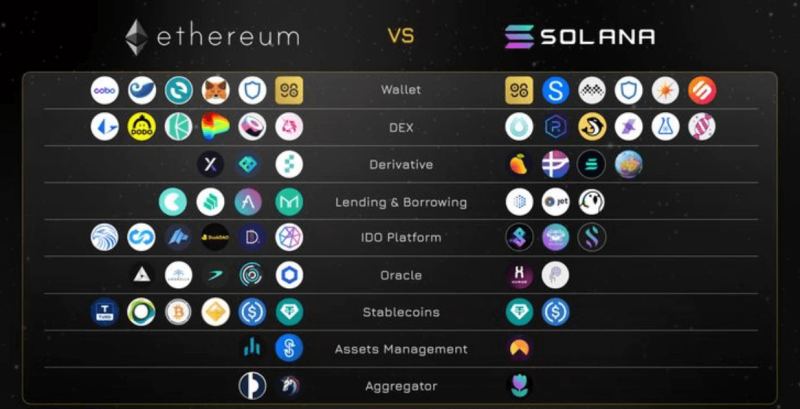
Ethereum network activity is becoming a DeFi efficiency test
Fresh market data points to busier Ethereum, Solana and Avalanche networks even as costs fall, putting DeFi's next test on real usage rather than token-price momentum alone.

Halo leads Xbox Game Pass into a post-restructuring retention test
Microsoft's late-July Game Pass wave, led by Halo: Campaign Evolved, tests whether franchise nostalgia, day-one access, and broader platform support can stabilize Xbox sentiment after restructuring.

Mastercard and PrivatBank make agentic payments a live Ukraine banking test
Mastercard and PrivatBank completed Ukraine's first payment executed by an AI agent, testing whether agentic commerce can stay authenticated, permissioned, and visible inside bank rails.
Crypto's Clarity Act rally still depends on whether Washington can solve the ethics problem
A market bounce around Coinbase and Circle shows traders want crypto market-structure law, but the Senate fight is now as much about conflicts as tokens.

Clarity Act ethics compromise gives crypto markets a policy rally before the hard vote
Coinbase, Circle and Bitcoin rallied after reports of a Senate ethics compromise, but the CLARITY Act still needs Democrats and time before the August recess.

Uniswap's v4 fee vote and Robinhood Chain expansion put token value capture back at the center of DeFi governance
Final on-chain votes on Uniswap protocol fees would direct new fee streams into UNI burns, including activity on Robinhood Chain, giving DeFi investors a fresh test of whether usage can translate into token economics.

Sony's PlayStation comments about gaming beyond the living room sharpen the industry's next hardware question: whether the console future becomes portable, digital-first, and less tied to the TV
Sony's June investor Q&A and fresh coverage of PlayStation strategy point to a platform future built around flexible play, stronger digital economics, and hardware experiences that reach beyond the traditional living-room console.
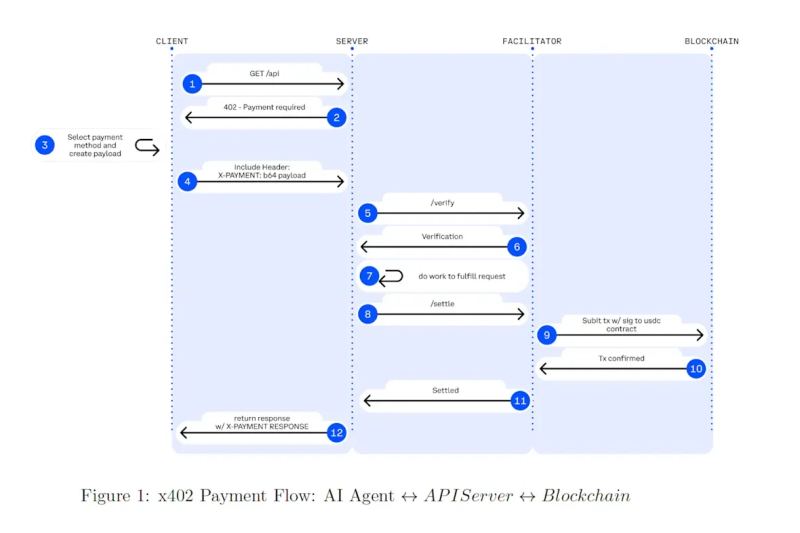
The Linux Foundation's x402 launch gives Coinbase's agent-payment protocol a neutral home as stablecoins, cards, and APIs move toward one programmable internet payment layer
The Linux Foundation says the x402 Foundation is now operational with 40 members, including Coinbase, Circle, Solana Foundation, Stripe, Visa, Mastercard, and major cloud providers.
OpenAI's ChatGPT Work push says the next AI battle is not over smarter chat alone but over whether a model can reliably turn messy goals into finished work across the tools teams already use
OpenAI says ChatGPT Work, powered by GPT-5.6, can gather context from team tools and desktop apps to plan, act, and produce finished outputs, signaling that workplace AI is shifting from answer generation toward managed execution across real workflows.

The ECB's decision to bring 36 payment providers into its digital euro pilot shows Europe is no longer debating a retail CBDC in the abstract and is now testing whether a central-bank payment rail can fit inside everyday fintech distribution
The European Central Bank has selected 36 payment service providers for a 12-month digital euro pilot scheduled to begin in the second half of 2027, turning the digital euro from policy theory into an operational test of how public money might coexist with private payment platforms.

Anthropic's Claude Science workbench shows the next AI battleground is not chat quality, but whether a model can carry serious research work with traceability intact
Anthropic's June 30 launch of Claude Science matters because it packages agentic research, scientific connectors, auditable artifacts, and elastic compute into one environment built to fit how labs already work.

Google turns ISTE into a live test of whether Gemini can become classroom infrastructure instead of just another chatbot
Google's latest education push matters because it ties Gemini directly to classroom context, study workflows, and district AI readiness, which is a more serious attempt to make generative AI part of everyday school operations rather than a novelty layer on top.